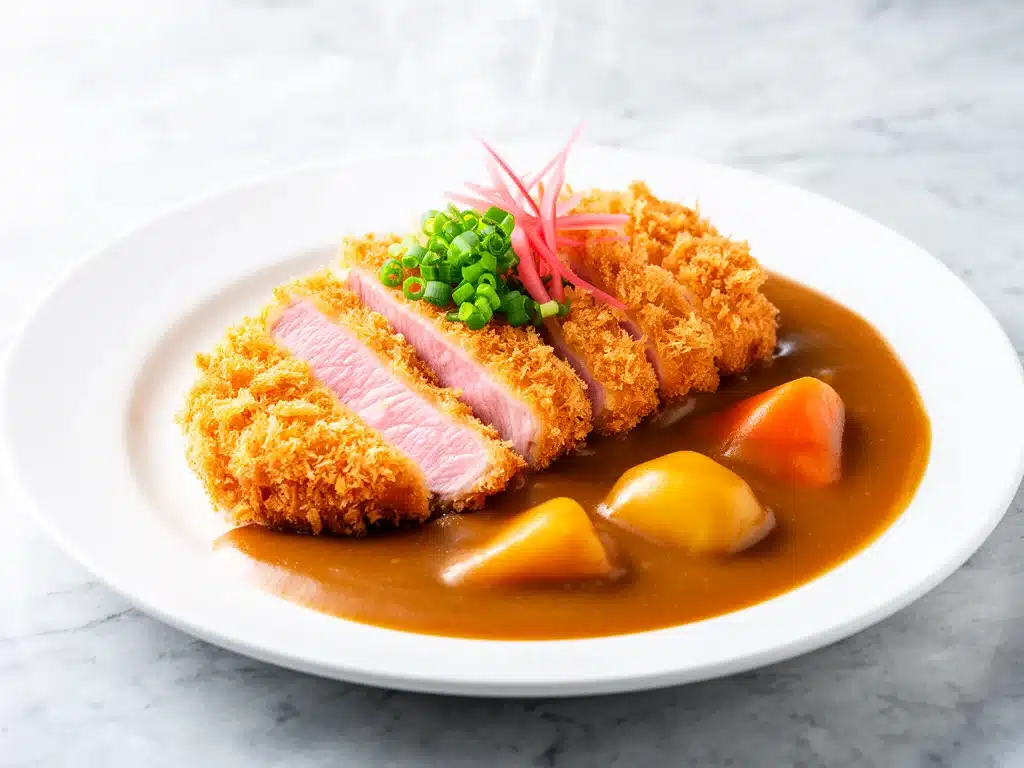
I still remember the first time I ordered katsu curry at a tiny, steamy restaurant in Shinjuku. It was raining—hard, that relentless Tokyo drizzle that soaks through your coat in seconds. I was cold, tired, and honestly, ready to give up on the trip. Then this plate arrived: a mound of fluffy white rice, a golden-brown pork cutlet so crispy it made a sound when I cut into it, and a rich, dark curry sauce that smelled like comfort itself.
I took one bite, and the rain stopped mattering. The curry wasn’t spicy in a “burn your tongue” way. It was savory, slightly sweet, deeply aromatic, and just complex enough to make me want to close my eyes. I didn’t just eat dinner that night; I felt hugged.
Since then, I’ve made Japanese Katsu Curry with Crispy Pork dozens of times in my own kitchen. Some days it’s perfect. Some days I burn the panko. But every single time, it’s worth the effort. This isn’t just another curry recipe. It’s the dish that turned my weeknight dinners from a chore into something I actually look forward to. And here’s the secret: it’s easier than you think. You don’t need a trip to Japan to get this flavor. You just need a few key ingredients and a little patience.
Why You’ll Love This Japanese Katsu Curry
There are about ten reasons I keep coming back to this recipe, but let’s be honest—you’re probably here because you want dinner that feels fancy but doesn’t require a culinary degree. This Japanese Katsu Curry with Crispy Pork delivers on all fronts.
It’s the Ultimate Comfort Food — I’ve served this to picky eaters, spice-lovers, and people who claim they “don’t like Asian food.” Everyone asks for seconds. The flavor profile is universally appealing: savory, sweet, and deeply satisfying.
The Texture Contrast is Addictive — There’s nothing quite like the crunch of panko breadcrumbs giving way to tender, juicy pork, all dipped in that velvety curry sauce. It’s a sensory experience. I’ve made this recipe so many times because I crave that specific crunch.
It’s Better Than Takeout — Real talk: restaurant katsu curry is often soggy or overly salty. When you make it at home, you control the quality of the pork, the freshness of the spices, and the thickness of the sauce. Plus, it costs about half the price of delivery.
It’s Surprisingly Simple — The hardest part is waiting for the pork to cook. The curry sauce itself comes together in one pot with ingredients you likely already have. I’ve walked my teenagers through making this over FaceTime. They didn’t burn the house down, and the result was restaurant-quality.
It Freezes Well (Sort Of) — The curry sauce freezes beautifully for up to three months. The pork cutlet is best fresh, but if you make extra sauce, you can freeze it and make new cutlets later. It’s meal prep heaven.
This recipe has completely changed our Friday nights. No more debating what to order. No more waiting for delivery drivers. Just hot, fresh, homemade katsu curry that makes everyone happy.
Ingredients You’ll Need for Crispy Pork and Rich Curry
Here’s the best part: you probably have most of this already. I’m particular about three ingredients here, and I’ll tell you exactly why.
For the Crispy Pork Cutlet (Katsu)
Pork loin chops or tenderloin (1.5 lbs / 700g) — I prefer loin chops because they stay juicy. Tenderloin is leaner but can dry out if overcooked. Ask your butcher to pound them thin—about ¼ inch thick. If you can’t find thin cuts, pound them yourself with a meat mallet or the bottom of a heavy pan.
Japanese panko breadcrumbs (2 cups / 160g) — This is non-negotiable. Regular breadcrumbs are too fine and won’t give you that signature shatteringly crisp texture. I buy panko in bulk because I use it for everything from fried chicken to this honey garlic butter chicken. Look for brands like Nakano or Marutomo.
All-purpose flour (1 cup / 125g) — Just a light dusting to help the egg wash stick. Don’t skip this step, or the panko will fall off.
Eggs (2 large, beaten) — Room temperature eggs work best. Whisk them well until there are no streaks of white.
Salt and black pepper — To taste. I use about 1 teaspoon of salt and ½ teaspoon of pepper for the pork.
Vegetable oil (for frying) — I use a neutral oil with a high smoke point. Canola or peanut oil works great. You need enough to come up ½ inch in your pan.
For the Japanese Curry Sauce
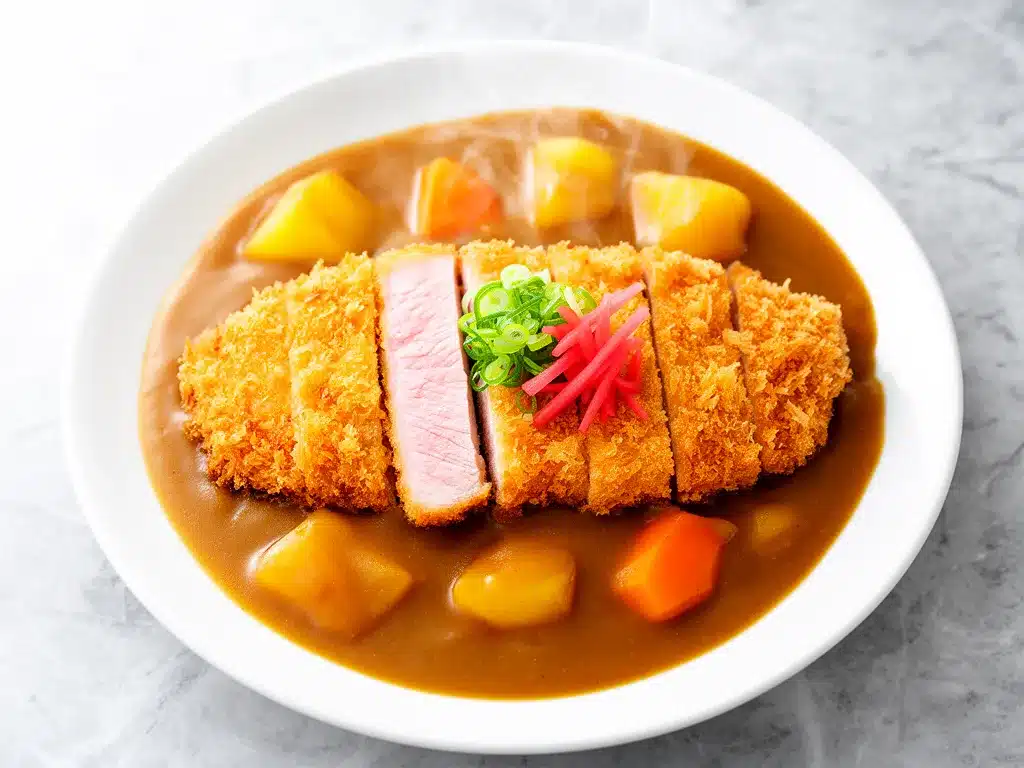
Onion (2 large, thinly sliced) — This is the base. Japanese curry relies on caramelized onions for sweetness. I take my time here—20 minutes of low-and-slow cooking. It’s worth it.
Carrots (2 medium, chopped into bite-sized pieces) — Classic curry veg. Don’t chop them too small, or they’ll dissolve into mush.
Potatoes (2 medium, peeled and cubed) — Yukon Gold or Russet work well. Add them later than the carrots so they don’t disintegrate.
Garlic (4 cloves, minced) — Yes, four cloves. Don’t be shy. Fresh garlic is key.
Ginger (1 tablespoon, freshly grated) — Adds warmth and depth. Pre-grated ginger in a tube works in a pinch, but fresh is better.
Japanese curry roux blocks (2 boxes / 14 oz total) — I use S&B Golden Curry or Vermont Curry. They come in mild, medium, and hot. I always go medium—it’s the perfect balance. This is the magic ingredient that makes it taste like authentic katsu curry.
Water or dashi stock (4 cups / 950ml) — Water works fine, but dashi adds umami depth. I use a mix of both.
Soy sauce (1 tablespoon) — Adds saltiness and color. I use low-sodium so I can control the final salt level.
Honey or sugar (1 tablespoon) — Balances the savory elements. I prefer honey for its floral notes.
Apple, grated (1 small) — This is a Japanese secret! The pectin and natural sugars in the apple thicken the sauce and add subtle sweetness. I grate it on a box grater and add it with the onions.
Equipment Needed
You don’t need fancy equipment for this. Here’s what I actually use.
Large skillet or Dutch oven — For frying the pork. I use a 12-inch cast iron skillet because it holds heat well. You need enough space to fry the cutlets in batches without crowding.
Large pot or saucepan — For the curry sauce. A 6-quart pot works well. I prefer stainless steel for even heating.
Meat mallet or rolling pin — To pound the pork thin. If you don’t have a mallet, use the bottom of a heavy saucepan.
Three shallow bowls — For the dredging station: flour, egg wash, and panko. I use pie plates because they’re wide and shallow.
Box grater — For the apple and ginger. A microplane works too, but a box grater is faster.
Slotted spoon or tongs — For handling the pork in hot oil. Tongs give you better control.
Instant-read thermometer — Not strictly necessary, but helpful for ensuring the pork reaches 145°F (63°C) without overcooking.
Cutting board and sharp knife — For prepping the vegetables.
How to Make It: Step-by-Step
Alright, let’s make this! I’m walking you through exactly how I do it, including the little tricks I’ve picked up over the years.
Step 1: Prep the Curry Sauce (20-25 minutes)
Start with the curry because it needs time to simmer. Heat 1 tablespoon of oil in your large pot over medium heat. Add the sliced onions and cook slowly for 15-20 minutes, stirring occasionally, until they’re deeply caramelized and brown. This takes patience, but it’s the foundation of the flavor. Add the grated apple, minced garlic, and grated ginger. Cook for 2 more minutes until fragrant.
Add the carrots and potatoes. Stir to coat them in the onion mixture. Pour in the water or dashi stock. Bring to a boil, then reduce heat to low, cover, and simmer for 15 minutes until the vegetables are tender. Stir in the soy sauce and honey.
Step 2: Prepare the Pork Cutlets (10 minutes)
While the curry simmers, prep the pork. If your chops are thick, place them between two sheets of plastic wrap and pound them to ¼-inch thickness. This ensures even cooking and better breading adherence. Pat the pork dry with paper towels—moisture is the enemy of crispiness.
Season both sides with salt and pepper. Set up your dredging station: three shallow bowls. Bowl 1: flour. Bowl 2: beaten eggs. Bowl 3: panko breadcrumbs.
Step 3: Dredge the Pork (5 minutes)
Dust each cutlet lightly in flour, shaking off any excess. Dip it into the egg wash, ensuring it’s fully coated. Then press it firmly into the panko, making sure every surface is covered. Press down gently so the breadcrumbs adhere. Repeat with all cutlets. Place them on a wire rack or plate while you heat the oil.
Step 4: Fry the Katsu (10-12 minutes)
Heat ½ inch of vegetable oil in your large skillet over medium-high heat. Test the oil by dropping in a few panko crumbs—they should sizzle immediately. Carefully place 2-3 cutlets in the oil (don’t crowd the pan). Fry for 3-4 minutes per side until golden brown and crispy. The internal temperature should reach 145°F (63°C). Transfer to a wire rack set over a baking sheet to drain. Do not place on paper towels, or the bottom will get soggy.
Step 5: Finish the Curry (5 minutes)
Once the vegetables are tender, turn off the heat. Break the curry roux blocks into small pieces and stir them into the pot. The residual heat will melt the roux. Stir continuously until fully dissolved and the sauce is smooth. Taste and adjust seasoning if needed. It should be rich, slightly sweet, and savory.
Step 6: Assemble and Serve
Slice the fried pork cutlets into strips. This makes it easier to eat and helps the sauce penetrate the meat. Serve over a mound of steamed Japanese short-grain rice. Top the rice with the sliced katsu. Ladle the warm curry sauce over the pork and around the rice. Garnish with pickled ginger (beni shoga) and chopped green onions if you like.
Total Time: About 50 minutes (15 minutes active, 35 minutes mostly hands-off)
Expert Tips & Tricks for Perfect Katsu
Here’s everything I’ve learned from making this dozens of times. These tips will save you from my mistakes.
Pound the Pork Thin — Thick cutlets take longer to cook and can result in dry meat. Thin cutlets cook quickly, staying juicy, and have more surface area for crispy coating. I pound mine to ¼ inch every time.
Double-Dip the Breading — For extra-crispy katsu, dip the pork in flour, then egg, then panko, then egg again, then panko one more time. It’s more work, but the crust is insanely crunchy. I do this for dinner parties.
Don’t Skip the Resting Rack — After frying, let the pork rest on a wire rack, not a plate. This keeps the bottom crisp. If you stack them or put them on a plate, steam gets trapped and makes them soggy.
Caramelize the Onions Properly — Rushing the onions is the #1 mistake people make. Low heat, slow cooking, and patience. If they burn, start over. The sweetness they provide balances the savory curry perfectly.
Add Roux Off Heat — Always remove the pot from heat before adding the curry roux. High heat can cause the roux to clump or separate. Stirring off heat ensures a smooth, glossy sauce.
Grate the Apple — Don’t cube it. Grating releases the pectin, which thickens the sauce naturally. It’s a Japanese home-cooking secret that makes a huge difference.
Use Japanese Short-Grain Rice — Sushi rice or Koshihikari rice is sticky and slightly sweet, which pairs perfectly with the rich curry. Don’t use long-grain rice like basmati—it won’t hold the sauce the same way.
Variations & Substitutions
Once you’ve nailed the basic version, here’s how you can mix it up. I’ve tried all of these.
Chicken Katsu Curry — Use chicken breast or thigh cutlets instead of pork. The cooking time is similar. I use this version when I want something lighter. It’s just as delicious.
Vegetable Katsu Curry — Replace the pork with thick slices of eggplant or tofu. Coat them in flour, egg, and panko, then fry. Serve with the same curry sauce. It’s hearty and satisfying.
Beef Katsu Curry — Use thinly sliced beef sirloin. Pound it thin and follow the same breading process. Beef adds a richer, deeper flavor. My husband loves this version.
Spicy Katsu Curry — Add 1-2 tablespoons of chili paste or sriracha to the curry sauce while it simmers. Adjust to your heat preference. I like a little kick.
Gluten-Free Option — Use gluten-free flour and gluten-free panko (brands like Enjoy Life make good ones). The roux blocks usually contain wheat, so check labels or use a gluten-free roux alternative. I’ve tested this with GF panko, and it still gets crispy.
Baked “Katsu” (Lighter Version) — Instead of frying, place breaded cutlets on a wire rack, spray lightly with oil, and bake at 400°F (200°C) for 20-25 minutes, flipping halfway. It’s less crispy but much lower in fat. I do this when I’m trying to eat cleaner.
Serving & Storage
How to Serve: I usually serve this straight from the stove at the dinner table. The contrast of hot, crispy pork and warm curry sauce over steaming rice is perfect. Side dishes? A simple pickled cucumber salad or some steamed broccoli works well. I also love serving it with a side of crispy roasted chickpea and cucumber salad for extra crunch.
Toppings Bar: When I have guests, I put out: pickled ginger, chopped green onions, shichimi togarashi (Japanese seven-spice blend), and maybe some grated daikon radish. Everyone customizes their bowl.
Storage Instructions:
Refrigerator: Store the curry sauce in an airtight container for up to 4 days. The pork cutlet is best eaten fresh, but if you must store it, keep it in the fridge for 1-2 days. Reheat gently to avoid sogginess.
Reheating: Reheat the curry sauce on the stove over low heat, adding a splash of water if it’s too thick. For the pork, reheat in the oven at 375°F (190°C) for 10 minutes to restore crispiness. Avoid the microwave, or the crust will turn soft.
Freezing: The curry sauce freezes beautifully for up to 3 months. Let it cool completely, then transfer to freezer-safe containers. Thaw in the fridge overnight and reheat gently. Do not freeze the pork cutlet—it will lose all texture.
Nutrition Information
I’m not a nutritionist, but here’s the breakdown if you’re tracking. Per serving (based on 4 servings):
– Calories: 650
– Protein: 35g
– Carbs: 70g
– Fiber: 5g
– Sugar: 12g
– Fat: 22g
– Saturated Fat: 5g
– Cholesterol: 90mg
– Sodium: 600mg
What’s Good: High protein from the pork. Good source of vitamins from the carrots and potatoes. The curry spices have anti-inflammatory properties.
What to Know: Higher in carbs due to the rice and potatoes. Contains gluten (unless using GF panko and roux). Moderate sodium from the soy sauce and roux.
My Take: Look, this is comfort food. It’s not a diet recipe. But it’s way better than takeout, costs less, and I know exactly what’s in it. When I want to make it lighter, I use less oil for frying, swap some rice for cauliflower rice, and load up on vegetables. But usually? I just eat a reasonable portion and enjoy it.
Final Thoughts
So that’s my go-to Japanese Katsu Curry with Crispy Pork! I’ve probably talked your ear off at this point, but when you make a recipe this often, you have a lot to say about it.
This has saved weeknight dinners more times than I can count. It’s my answer to “what’s for dinner” when I’m tired, don’t want takeout, and still want something that tastes really good. My kids are happy, my husband’s happy, and I’m happy because I’m not stressed about cooking.
Make it yours! Try different add-ins, swap in your favorite vegetables, adjust the spice level. The best recipes are the ones you adapt to your family’s tastes. If you make this, drop a comment and let me know what you think! I love hearing how recipes turn out in your kitchen. And if something doesn’t work, tell me that too—I’m here to help troubleshoot.
Happy cooking! And I hope your kitchen smells half as good as mine does right now.
Frequently Asked Questions
Can I use chicken instead of pork?
Absolutely! Chicken katsu is just as popular. Use chicken breast or thigh cutlets, pounded thin. The cooking time is similar, but chicken can dry out faster, so keep an eye on the internal temperature. I use this version when I want something lighter.
Why is my curry sauce too thin?
Japanese curry roux blocks thicken the sauce, but if it’s still too thin, let it simmer uncovered for a few more minutes. You can also add a slurry of 1 tablespoon cornstarch mixed with 2 tablespoons water. Stir it in and let it cook for 2 more minutes.
Can I make the curry sauce ahead?
Yes! In fact, I think it tastes better the next day. The flavors meld and deepen overnight. Make the sauce, let it cool, and store it in the fridge for up to 4 days. Reheat gently before serving.
What is Japanese short-grain rice?
It’s a sticky, slightly sweet rice variety like Koshihikari or sushi rice. It’s essential for katsu curry because it holds the sauce well and provides the right texture. Don’t substitute with long-grain rice like basmati or jasmine—it won’t work the same way.
Can I bake the pork instead of frying?
You can! Place breaded cutlets on a wire rack, spray lightly with oil, and bake at 400°F (200°C) for 20-25 minutes, flipping halfway. It’s less crispy but much lower in fat. I do this when I’m trying to eat cleaner, but the fried version is still my favorite.
How do I store leftover katsu?
Store the pork in an airtight container in the fridge for 1-2 days. To reheat, place it in the oven at 375°F (190°C) for 10 minutes to restore crispiness. Avoid the microwave, or the crust will turn soft. The curry sauce can be refrigerated for up to 4 days.
What is shichimi togarashi?
It’s a Japanese seven-spice blend that usually includes chili peppers, sesame seeds, orange peel, and seaweed. It adds a complex, slightly smoky heat to dishes. I sprinkle it over katsu curry for extra flavor. You can find it in Asian grocery stores or online.
Pin This Recipe!
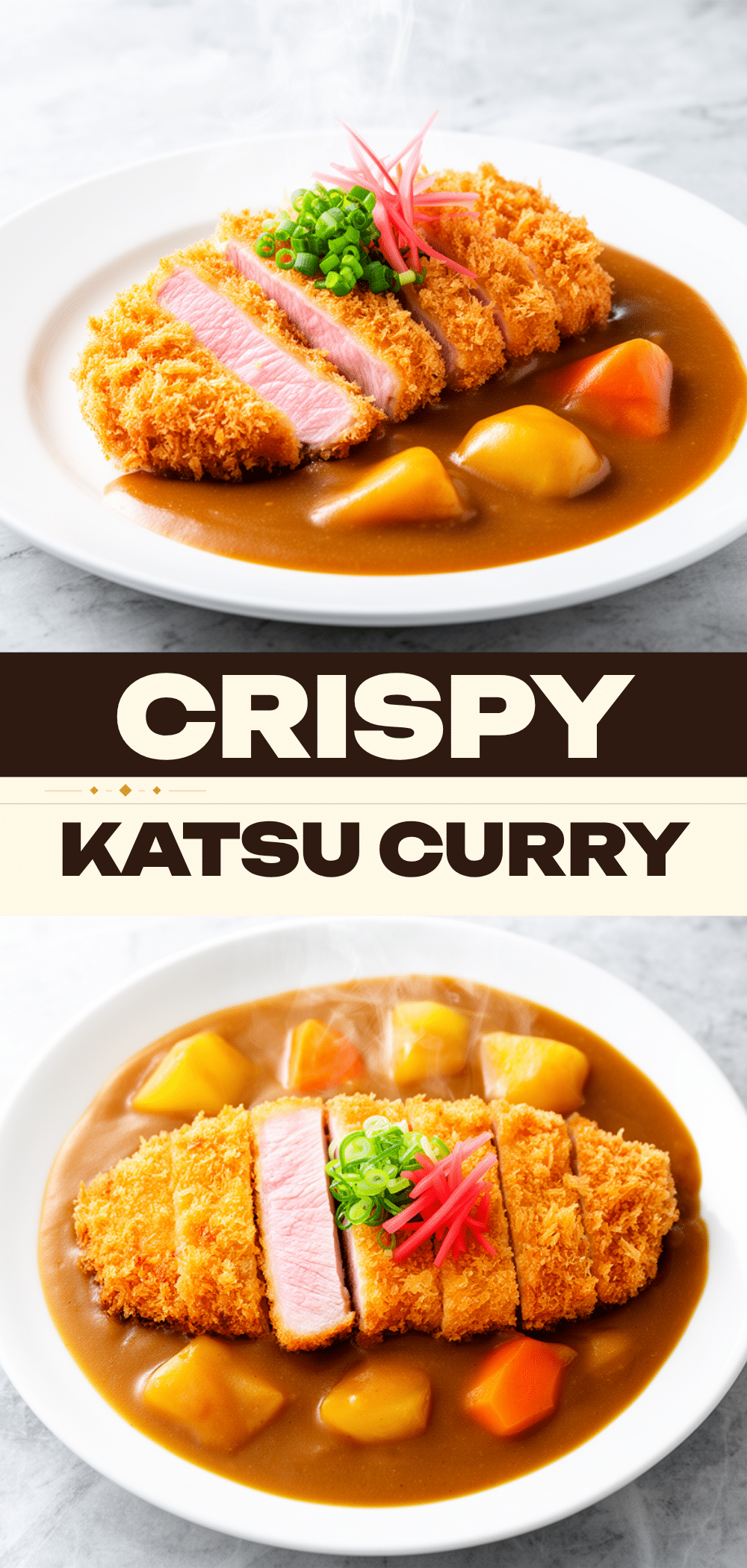

Japanese Katsu Curry with Crispy Pork: Easy Recipe
- Total Time: 50 minutes
- Yield: 4 servings 1x
Description
A comforting and crispy Japanese pork cutlet served over steamed rice with a rich, savory, and slightly sweet homemade curry sauce. This recipe delivers restaurant-quality flavor with simple techniques and accessible ingredients.
Ingredients
- 1.5 lbs (700g) pork loin chops or tenderloin
- 2 cups (160g) Japanese panko breadcrumbs
- 1 cup (125g) all-purpose flour
- 2 large eggs, beaten
- 1 tsp salt
- 1/2 tsp black pepper
- Vegetable oil (for frying)
- 2 large onions, thinly sliced
- 2 medium carrots, chopped into bite-sized pieces
- 2 medium potatoes, peeled and cubed
- 4 cloves garlic, minced
- 1 tbsp ginger, freshly grated
- 2 boxes (14 oz total) Japanese curry roux blocks (medium)
- 4 cups (950ml) water or dashi stock
- 1 tbsp soy sauce
- 1 tbsp honey or sugar
- 1 small apple, grated
Instructions
- Heat 1 tablespoon of oil in a large pot over medium heat. Add sliced onions and cook slowly for 15-20 minutes until deeply caramelized.
- Add grated apple, minced garlic, and grated ginger to the onions. Cook for 2 more minutes until fragrant.
- Add carrots and potatoes to the pot. Stir to coat in the onion mixture.
- Pour in water or dashi stock. Bring to a boil, then reduce heat to low, cover, and simmer for 15 minutes until vegetables are tender.
- Stir in soy sauce and honey into the vegetable mixture.
- While curry simmers, pound pork chops to 1/4-inch thickness and pat dry. Season with salt and pepper.
- Set up a dredging station with three bowls: flour, beaten eggs, and panko breadcrumbs.
- Dust pork in flour, dip in egg, then press firmly into panko to coat completely.
- Heat 1/2 inch of vegetable oil in a large skillet over medium-high heat.
- Fry pork cutlets in batches for 3-4 minutes per side until golden brown and crispy. Internal temperature should reach 145°F (63°C).
- Transfer fried pork to a wire rack to drain. Do not place on paper towels.
- Turn off heat under the curry pot. Break curry roux blocks into pieces and stir into the pot until fully dissolved and smooth.
- Slice the fried pork cutlets into strips.
- Serve pork over steamed Japanese short-grain rice. Ladle warm curry sauce over the pork and rice. Garnish with pickled ginger and green onions if desired.
Notes
For extra-crispy katsu, double-dip the breading (flour, egg, panko, egg, panko). Always add curry roux off the heat to prevent clumping. Use Japanese short-grain rice for best texture. The curry sauce freezes well for up to 3 months, but do not freeze the pork cutlet.
- Prep Time: 15 minutes
- Cook Time: 35 minutes
- Category: Main Course
- Cuisine: Japanese
Nutrition
- Serving Size: 1 pork cutlet, 1 cup
- Calories: 650
- Sugar: 12
- Sodium: 600
- Fat: 22
- Saturated Fat: 5
- Carbohydrates: 70
- Fiber: 5
- Protein: 35
Keywords: Japanese Katsu Curry, Crispy Pork, Curry Sauce, Comfort Food, Easy Dinner, Pork Cutlet, Asian Recipe